Skip to content


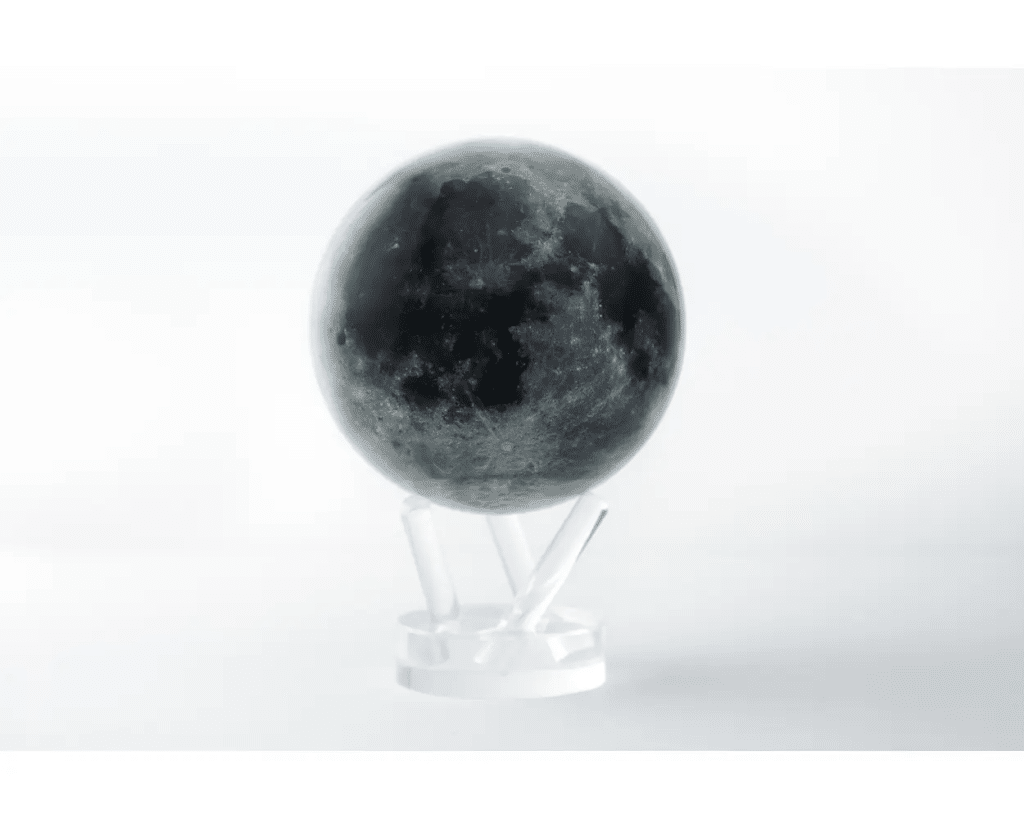
The moon is the stuff dreams are made of. We invent stories about it, pretend it is made entirely of cheese, create papier-mâché models from it, and dream of living there.
The moon is a big deal – it is an all-encompassing force that controls the tides, maintains Earth’s place in the universe as a habitable planet, regulates our daily rhythm, and marks a new year for many cultures.
January 21st marks the lunar new year 4721. On this night, a new moon supermoon was only 221,561 miles away from Earth, the closest new moon has been to our home since the year 1030, which is 997 years ago for those who don’t want to calculate.
What is a supermoon?
When astronomer Richard Noelle began using the term supermoon in 1979, he defined it as “both a new and a full moon occurring at or near (within 10%) perigee.” Perigee is the point in the moon’s orbit where it is closest to Earth. When a full moon appears in the sky at or near perigee, it looks up to 14% larger and 30% brighter than a full moon at its farthest distance from Earth in orbit (known as apogee). It is important to note that the same applies to the new moon, but its alignment with Earth and the sun makes it difficult for us to see.
However, the term supermoon is not an official astronomical definition of the lunar event. The scientific name is perigee syzygy of the Earth-Moon-Sun system, with syzygy meaning that Earth, Moon, and Sun are perfectly aligned in the sky – at perigee.
It is also important to note that the opposite effect occurs. When the full moon is farthest from Earth (apogee), it appears smaller than the “average” moon, and this lunar event is called a micromoon.
How often do supermoons occur?
While one can easily imagine the orbit of a planet or moon as a circle, orbits are elliptical and vary over time. Therefore, not every full moon coincides with perigee – or even within 10% of perigee. Supermoons do not occur in a monthly cyclical pattern, but they do follow an approximate annual pattern. Supermoons occur in consecutive months each year, and depending on the timing of the orbit, three or four supermoon events take place.
According to the strictest astronomical definition of perigee syzygy, the sun, moon, and Earth align perfectly about every 14 months. Based on the broader criteria of Noelle’s supermoon, and according to The Farmer’s Almanac, there will be four full moon supermoons visible in 2023.
Full Moon Supermoon Dates 2023:
- July 3rd
- August 1st
- August 31st (A blue moon and the next and brightest full moon in 2023)
- September 29th
Are supermoons oversized?
No. A supermoon appears larger due to the simple fact that it is closer to us in the sky than a normal full moon.
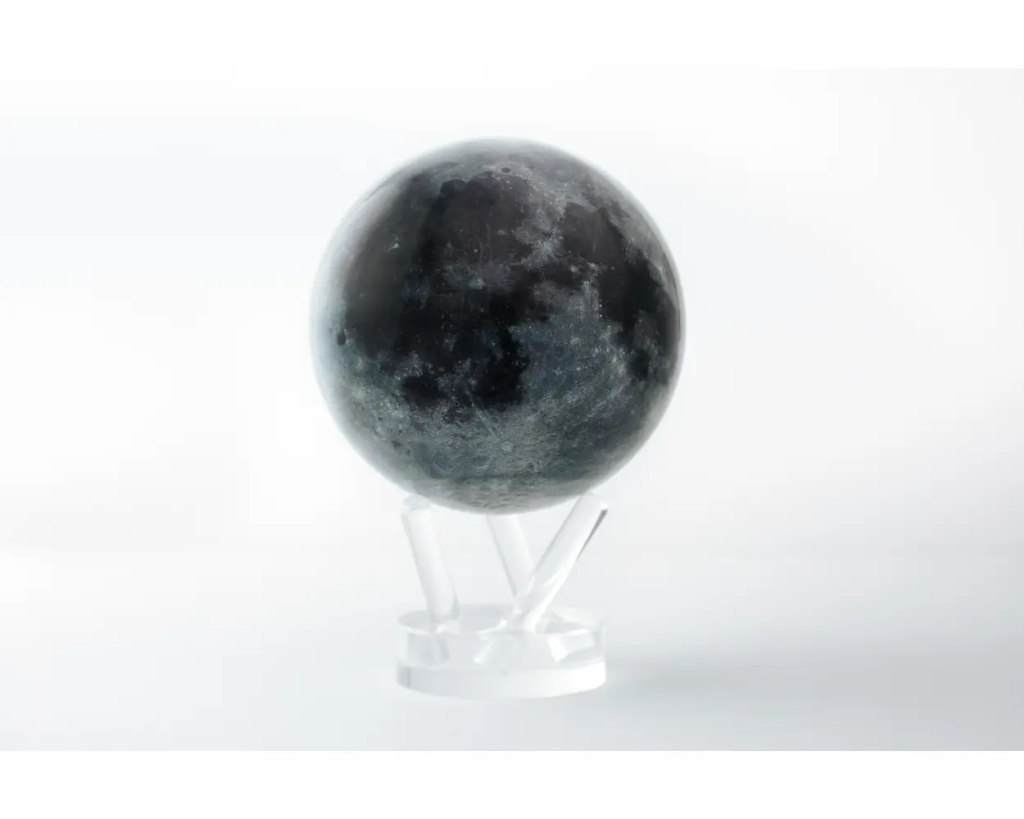
The same applies to any object in your home or the MOVA Moon Globe (see image above).
MOVA Moon Globe Size Experiment:
- Sit at a table or desk. Place your MOVA Moon Globe about 12 inches away from you. Look at the moon globe.
- Take your MOVA Moon Globe and place it about an inch from your face. It appears larger than on the base.
- Move the MOVA Moon Globe to the other side of the room and return to your original spot. Look at the moon globe; it seems the smallest of the three.
A supermoon is indeed the same moon with the same size – it has a diameter of 2,159 miles and is about a quarter the size of Earth. Just like your MOVA Moon Globe remains the same size during the experiment.
Astronomers have measured that the perceived difference of a supermoon is about 7% larger than a normal full moon and 14% larger than a micromoon.
By the way, many of us also experience the moon illusion. Moon illusion is a phenomenon where the perceived size of a full moon near the horizon increases (as the moon rises or sets). The moon appears larger because our brain naturally enlarges objects near a skyline – whether they are buildings or trees.
Are supermoons super bright?
Yes, contrary to the illusion that a supermoon is larger, a supermoon actually casts more light on Earth. In fact, a supermoon is 30% brighter than a micromoon. And this can be easily explained by science.
The closer the moon gets to Earth, the more reflected light from the moon reaches the Earth. One of the brightest (and closest) full moon supermoon events occurred on November 14, 2016, when the moon was only 221,525 miles away.
Do supermoons have superpower?
When the moon is at perigee, it exerts a greater gravitational pull on Earth. Both new moon and full moon supermoons cause tidal fluctuations of up to five centimeters. While the increase in high tide is most noticeable, the change also affects the low tide level.
The higher tides associated with supermoons are often referred to as king tides. King tides cause an unusually high water level along coastal areas, leading to tidal flooding. With climate change and rising sea levels, the impacts of king tides are becoming more severe.
When Noelle named the supermoon in 1979, he also theorized that the additional gravitational pull could cause earthquakes. In 2011, he stated that the supermoon on March 19th played a role in the earthquake and tsunami that hit Japan eight days earlier. Scientists have never found evidence of a connection between these or other supermoon and earthquake events. In response to Noelle in 2011, Dr. said that when the moon is closest to Earth in its orbit and is in its full moon configuration (relative to Earth and the sun), it should not affect the Earth’s internal energy balance, as there are moon tides every day.
What’s in a name?
Full Blue Supermoon (August 31, 2023): A blue moon is the second full moon in a calendar month. While they are rare, they are not an unexpected event due to the 29 days the moon takes to complete a phase cycle.
Full Strawberry Supermoon (June 14, 2022): Algonquin tribes called the full moon every June a strawberry moon, not because of its color – although moons can appear pink or red as they approach the horizon – but because it was strawberry picking season in their region in June.
Full Flower Supermoon (May 16, 2022): The full moon every May is called the flower moon to mark the flowers that bloom in the month of May.